
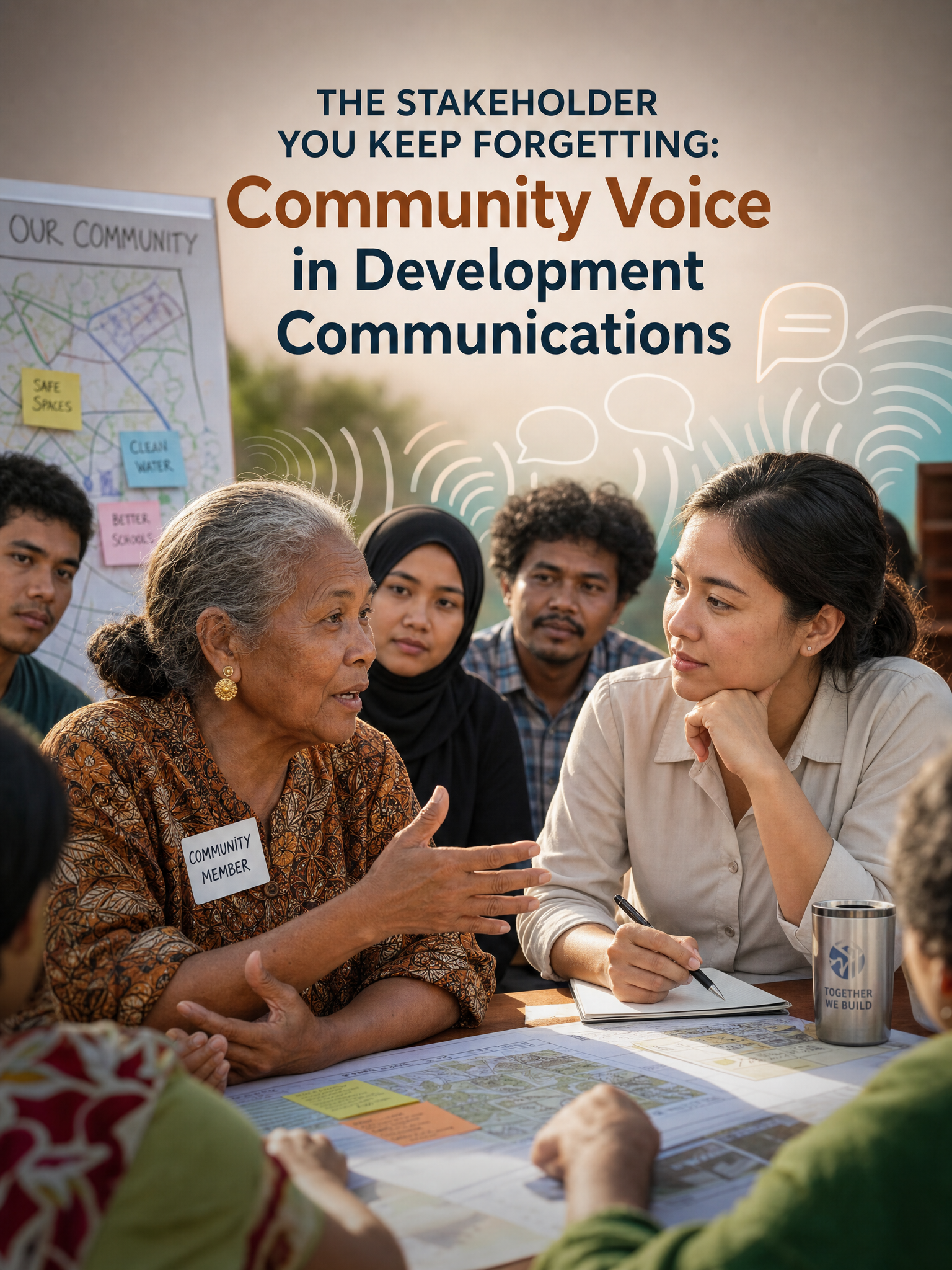
The Stakeholder Communication Hierarchy
Most development programmes list community members as a stakeholder group. Few genuinely treat them as a source of insight into communication. International donors are easy to communicate with. They expect formal reports, slide decks, and programme frameworks. Government counterparts expect policy briefs and technical documents. NGO partners expect coordination meetings and shared work plans. Communities expect to be listened to. Most programmes are not designed for listening.
Why This Gap Exists
The gap here is not intentional. Donors genuinely want communities to benefit. The gap is methodology. Programmes are designed by technical experts and implemented by coordination structures that rarely include systematic community feedback loops. Community communication is treated as output dissemination rather than as a research input. Communities are told what the programme will do. They are rarely asked what they need, how they define success, or why the programme is not working when it predictably fails.
This creates a vicious cycle. Communities do not feel heard. They disengage. Programme uptake suffers. Programme outcomes suffer. The implementers blame the communities for not adopting. The communities blame the programme for failing to understand their context.
What Changes When You Listen
The programmes that actually move the needle do something different. They build community feedback into the design phase. They pilot with real community members. They create simple, structured ways for communities to share problems and insights with the programme team. They close the loop by explaining what they did with that feedback. This is not sentiment analysis. It is genuine two-way communication.
Behaviour change is the foundation of development. Behaviour does not change because someone announces that it should. It changes when communities see the benefit, understand how to adopt the behaviour, and experience support through the transition. None of that happens without community voice. Communities will tell you exactly why an approach is not working. They will tell you what alternative would actually work. They will tell you what support they need. The question is whether you have built the communication systems to listen.
Designing Community Voice Into Your Programme
Building community feedback loops is not complicated. It starts with asking questions. It continues with listening without defensiveness. It ends with explaining what you did with what you heard. When communities see that their input actually changes the programme approach, they engage. When they see that their voice is heard but ignored, they withdraw.
Development organisations that communicate well with communities see better programme outcomes, faster adoption rates, and more sustainable behaviour change. Communities that are heard participate. Communities that participate drive their own change.