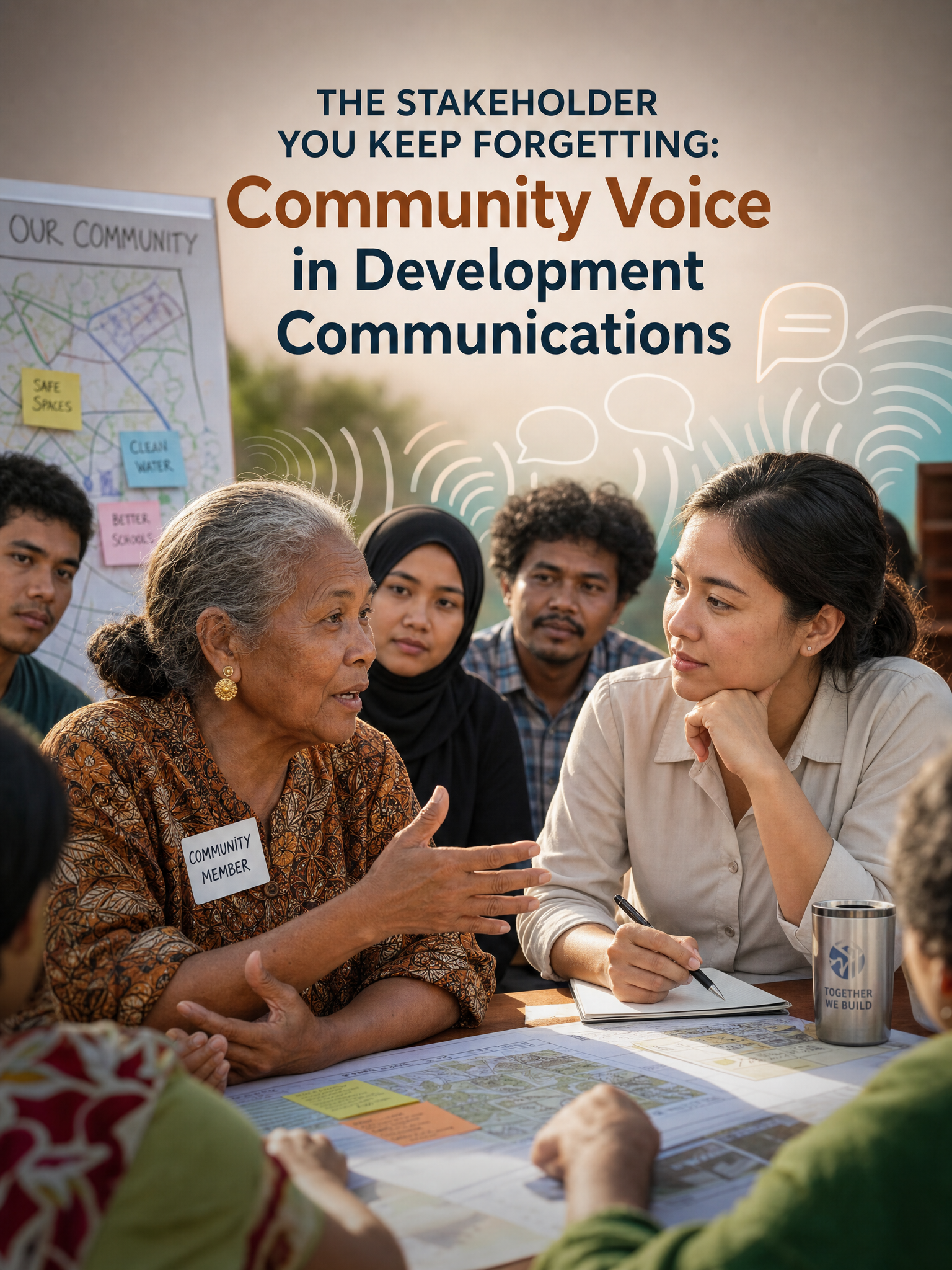

The Problem Nobody Wants to Name
Implementation gaps are not communication failures. They are communication opportunities masquerading as logistical problems. When development programmes falter, we tend to blame the design, the timeline, or the resources. But the real issue? People do not understand why they should change. Or they understand but cannot see how the change benefits them. Or they understand and see the benefit but do not know how to start.
Development programmes are littered with well-intentioned design documents that never translate into behaviour change. Communities understand the concept but do not adopt the practice. Workers complete the training but revert to old habits. Governments ratify the policy but do not provide resources for enforcement. The gap between adoption and sustained practice is where most programmes collapse. This is rarely a technical problem. It is almost always a communications problem.
Where Communications Breaks Down
When we work with development organisations, we start by observing the last mile directly. We sit with the people who are supposed to change behaviour. We listen to what is confusing, what feels irrelevant, what conflicts with existing incentives, and what nobody explained properly. In every case, the barrier is not capability. It is clarity, relevance, or trust.
Consider a real example: a climate programme failed to get farmers to adopt water-efficient irrigation, not because the technology was flawed, but because the materials were written for agronomists rather than farmers. A health programme struggled with vaccination uptake because its communication focused on individual benefit rather than community benefit. A governance initiative stalled because stakeholders had never been told why they were being asked to change in the first place.
These are not edge cases. They are patterns. The programmes that succeed are those that understand the barrier to behaviour change is not capability. It is clarity.
How Good Communications Fixes This
Communications is not about volume. It is about precision. It is about knowing exactly which stakeholder needs to understand exactly what, by which deadline, in which format, and through which channel. It is about designing the communication journey so that adoption feels like a natural progression rather than a demand.
This means communicating before the programme launches, not after. It means testing your messages with real community members before rollout. It means building feedback loops so that when something is not landing, you hear it early and adjust. It means explaining not just what people should do, but why they should do it, and what support they will receive as they make the shift.
The programmes we work with that move the needle do something specific. They design communications into the implementation plan from day one. They treat communications as a delivery mechanism, not an afterthought. The result is faster adoption, more sustained behaviour change, and programmes that actually achieve their objectives.
What This Means for Your Programme
If your development programme is stalling at implementation, stop troubleshooting the logistics. Start mapping the communication pathways. Where is information getting lost? Where are assumptions being made? Where is the incentive misaligned with the message? The solution is rarely more training. It is almost always better-designed communication.
Communication quality matters more than communication volume. A single well-designed message that resonates with your audience moves more people than ten generic messages that do not.